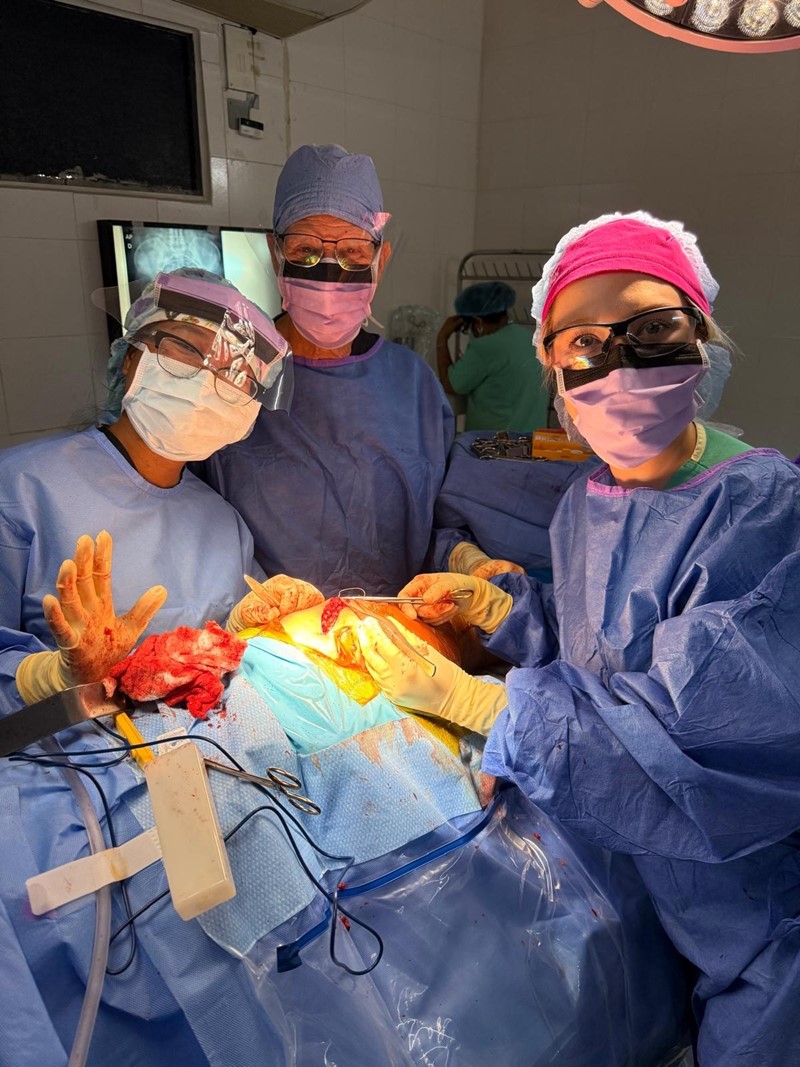


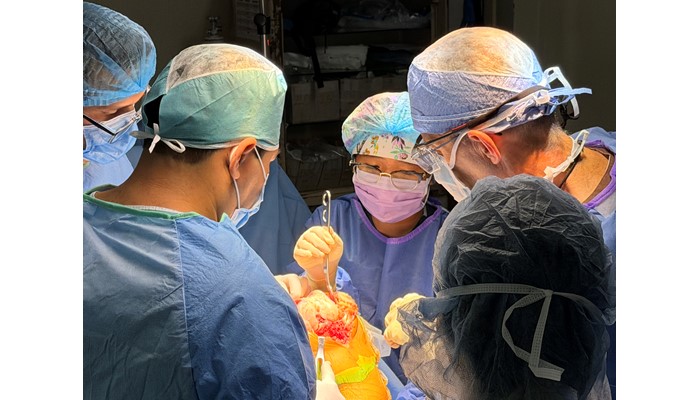
Growing up in a remote mountain village in Chin State, Myanmar, I experienced firsthand the challenges of poverty, political instability, and limited access to healthcare. My family came to the United States as refugees in search of safety and opportunity, and I am proud to be a first-generation college graduate and first-generation medical student. Those early experiences shaped my purpose and inspired me to pursue medicine so that I could one day serve communities facing similar hardships. As soon as I arrived in Honduras, I felt a deep connection with the people. Their resilience, kindness, and perseverance despite poverty and political challenges reminded me of my own childhood community in Myanmar. Coming from a farming family, I understand the physical demands of manual labor and the toll it takes on the musculoskeletal system. Many of the patients we treated suffered from chronic joint pain, spine conditions, hand injuries, and other orthopedic problems that prevented them from working and providing for their families. Caring for these patients felt as though I was serving my own community. I initially planned to spend one week working with the Hand Surgery Team, but the experience was so meaningful that I extended my trip for a second week to join the Joint and Spine Team. This unique opportunity allowed me to learn from multiple orthopedic subspecialties, including pediatric orthopedics, hand surgery, sports medicine, spine surgery, and joint replacement. Throughout the two weeks, I worked alongside exceptional orthopedic surgeons and healthcare professionals, spending nearly every day in the operating room except for one day serving with the prayer team. Under physician supervision, I assisted with patient evaluations, scrubbed into surgeries, held retractors, assisted with wound closure and suturing, and applied casts, splints, and postoperative dressings. During the first week, our surgical team performed 16 pediatric orthopedic procedures, 67 hand surgeries, 6 spine surgeries, and 9 sports medicine procedures. During the second week, the Joint and Spine Team completed 8 total hip replacements, 14 total knee replacements, 2 ACL reconstructions, and 13 spine surgeries. Witnessing this volume and diversity of orthopedic procedures in a resource-limited setting was an extraordinary educational experience. More importantly, I had the privilege of learning directly from surgeons who not only demonstrated exceptional technical skill but also modeled humility, teamwork, compassion, and servant leadership. One of the greatest lessons I learned was that excellent medicine is not dependent on advanced technology alone. The physicians relied on careful listening, thorough physical examinations, sound clinical reasoning, and teamwork to provide outstanding care despite limited resources. As an osteopathic medical student, this experience reinforced the importance of treating the whole person rather than simply treating a diagnosis. I also learned the value of cultural humility. Even speaking a few simple words in Spanish and taking the time to understand the local culture helped build trust with patients and reminded me that genuine human connection is one of the most powerful forms of healing. One of the most meaningful aspects of this mission was witnessing the role of faith in patient care. Before every clinic and every surgery, our team gathered to pray for wisdom, guidance, and for each patient. Whenever possible, we also prayed with our patients before they entered the operating room. Despite language barriers, prayer became a universal language that brought comfort, hope, and trust. Serving one day with the prayer team reminded me that healing extends beyond the physical body. Whether assisting in surgery or praying beside a patient, I witnessed firsthand how caring for a person's emotional and spiritual well-being is an essential part of whole-person care. This mission transformed me in ways I never expected. It strengthened my faith, deepened my commitment to serving underserved communities, and reaffirmed my calling to become an orthopedic surgeon. My experiences in Honduras, combined with my upbringing in Myanmar and my family's journey as refugees, have shaped the physician I aspire to become, one who restores not only mobility but also dignity, hope, and quality of life. I hope to dedicate my career to improving musculoskeletal health for underserved populations, both in the United States and around the world. I would like to extend my heartfelt appreciation to the orthopedic surgeons who welcomed me into their clinics and operating rooms. Thank you for your patience, mentorship, and willingness to teach throughout these two weeks. Your commitment to education, your willingness to explain complex cases, and the opportunity to actively participate in patient care gave me invaluable hands on experience and strengthened my passion for orthopedic surgery. Beyond teaching surgical skills, you demonstrated humility, teamwork, compassion, and Christ-centered service qualities I hope to embody throughout my own career. I am equally grateful to the residents, nurses, volunteers, interpreters, local healthcare providers, and the people of Honduras for welcoming me with such kindness and generosity. Their resilience, faith, and unwavering hope left a lasting impression on me. Today, I am a second-year medical student at Philadelphia College of Osteopathic Medicine South Georgia (PCOM South Georgia) while also pursuing my Doctor of Public Health (DrPH) degree at Walden University. Thanks to the generous support of Christian Medical & Dental Associations (CMDA) and Global Health Outreach (GHO) through the Samaritan's Purse Scholarship and the American Osteopathic Foundation (AOF) through the Rosnick Family Fund, I had the privilege of participating in a two-week orthopedic surgery mission in Honduras. I am also sincerely grateful to my mission team leaders for their mentorship, encouragement, and guidance throughout the experience, and to PCOM South Georgia for assisting with the documentation and administrative requirements that helped make this opportunity possible. I will carry the lessons, mentorship, friendships, and experiences from Honduras throughout my career as I strive to serve others with compassion, humility, excellence, and Christ-centered care. This mission was not simply a trip; it was a calling that will continue to shape the physician and person I am becoming.